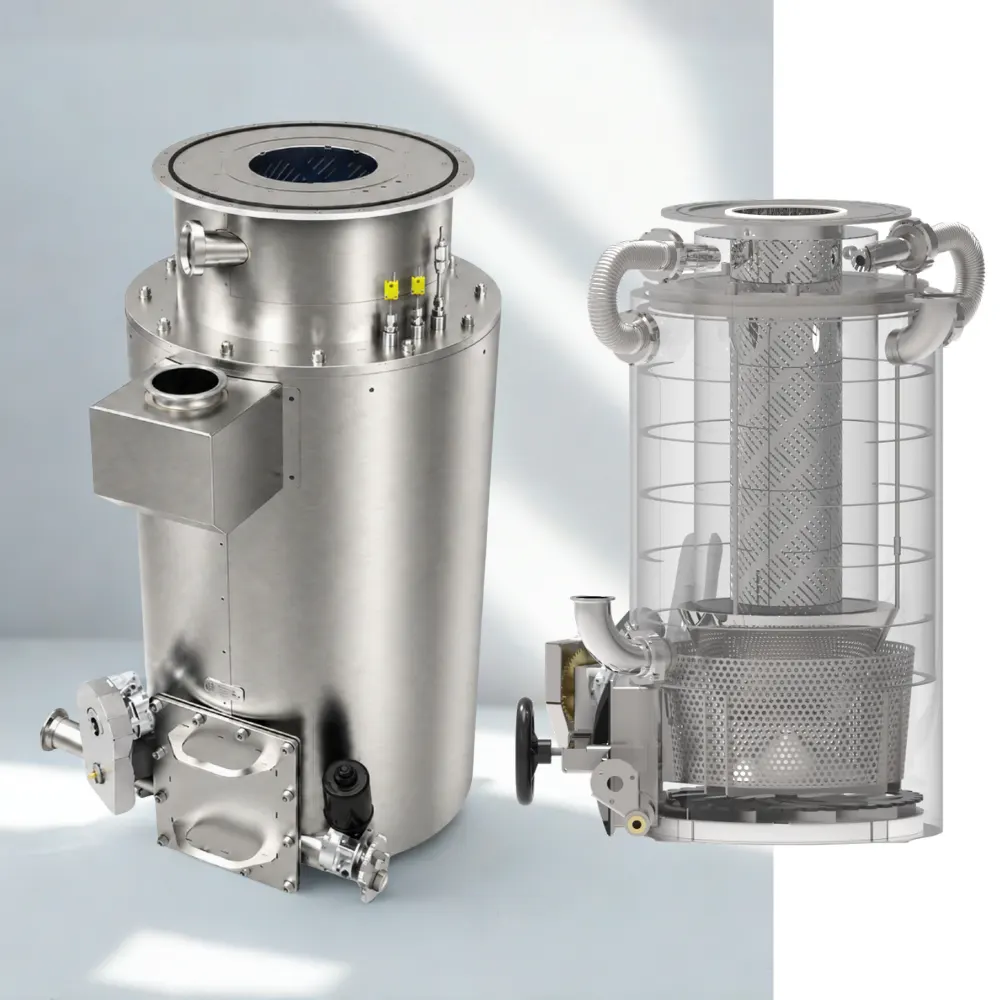
The results are unparalleled by fixed-bed and nozzle reactors (like the Imbert):
- Ultra-Clean Output: Production of clean gas over a much wider operating window.
- Technical Carbons: Our biocarbon PAH levels (and other contaminants) are typically below detectable limits.
Unprecedented Potential
Thanks to a new separation of gas and solids at critical conversion points and advanced controls, the GEN3 offers unique opportunities for the production of highly technical materials.
- Multi-Modal Value Stream: The reactor can operate in full biocarbon production, power generation, gas, or heat draw modes—an elasticity not possible with previous generations.
- Enhanced Hydrogen Production: The reactor’s base syngas starts at roughly 25% H₂ (much higher than the previous Imbert). With combined steam/O₂ injection, the H₂ content can exceed 50%, providing an excellent, N₂-diluent-free base for gas up-migration experiments toward pure H₂ or RNG (Renewable Natural Gas).
- Feedstock Flexibility: It handles even the most challenging materials excellently, expanding flexibility to include higher ash and finer biomass feedstocks.
Dedicated Research Platform
The Gen 3 technology is specifically configured to support in-depth research, and production, in areas such as biomass gasification, activated carbon, biomaterials, and general carbon material development. For robust data collection, the system incorporates up to 30 sensing points for temperature, pressure, gas, and (optional) emissions monitoring, coupled with APL’s latest developments in controls and software architecture.
Gen 3 Smart Device: Monitoring and Data Utility
The technology includes integrated monitoring, reporting and verification (dMRV) capability.
- Real-Time Data: It collects and transmits over 250 operations data points directly from the equipment in real time.
- Data Security: This critical information is securely stored on an on-site server and a remote APL server, enabling remote monitoring and technical support.
- Platform Design: The Base Monitoring System is designed as a robust, high-availability platform, complete with provisions for an International Cell Modem/Plan.
The software architecture includes features crucial for advanced R&D projects:
- Base Systems Data Extraction API: This provides a direct and structured interface to all 250+ operational datapoints. Its open access allows researchers to seamlessly integrate real-time and historical operational data into their statistical and modeling software (e.g., Python, R, or MATLAB) for proprietary analysis and deeper investigation into gasification dynamics and biocarbon formation.
- Automated Run Reporting: This feature generates standardized, clean, and comprehensive reports automatically at the conclusion of every operational cycle, removing the manual labor of data aggregation.
- Developed Analysis Plots: A library of ready-to-use visualizations for common performance metrics is included, enabling rapid assessment of reactor health, feedstock conversion efficiency, and biocarbon quality.
The Gen 3 architecture is designed as a modular platform that can be expanded depending on use case:
Gas Conditioning & Offtake Module (CharPallet only):
- Cools the product gas to under 100°C using a heat exchange system with automated surface cleaning.
- Removes particulate matter with a 5 micron bag house filter.
- Includes valving and automation to switch gas flow between internal consumption and external offtake for downstream processes.
- Uses the standard regenerative blower to provide moderate outlet gas pressure.
Steam Generation Module:
- Allows for generation of up to 8 kg/hr of steam to be blended with gasification air, metered by an onboard peristaltic pump into a monotube steam boiler.
- Enables the production of activated carbons and enriches the syngas with hydrogen for other downstream applications.
Gas Analysis Module (Major Species):
- Includes the Cubic Gasboard 3100 Gas Analyzer with a monitoring endpoint and a gas conditioning device.
- Analyzed major species include Carbon Monoxide (CO, typical 15-25%), Methane (CH4, typical 0.5-3%), Hydrogen (H2, typical 10-25%), and Carbon Dioxide (CO2, typical 10-20%).
Emissions Analysis Module (Low Concentration):
- Includes the Cubic Gasboard 3000 Emissions Analyzer and features a built-in zero pump and gas conditioning.
- Provides accurate measurement of low concentration gas species.
- Analyzed species include Carbon Monoxide (CO, typical 5-40 ppm operations), Methane (CH4, typical 0-10 ppm operations), and Nitrogen Oxide (NO, typical 5-250 ppm).
What is the GEN3 used for?
Designed for university researchers and “deep enthusiasts,” our first product based on this architecture—the CharPallet R&D—is a high-utility research platform. Leverage the variety of “levers to pull” to produce:
- Technical Carbons (Black Carbons): A single category encompassing biochar, activated carbons, graphite, and bio-materials.
- Green Gases: Syngas, hydrogen (H₂), and methane (CH₄) derived from bio-sources.
The GEN3 is not just a reactor; it is a “Carbon Transformer” that paves the way for regenerative flows and waste-to-value solutions, bringing you to the frontier of thermal conversion.